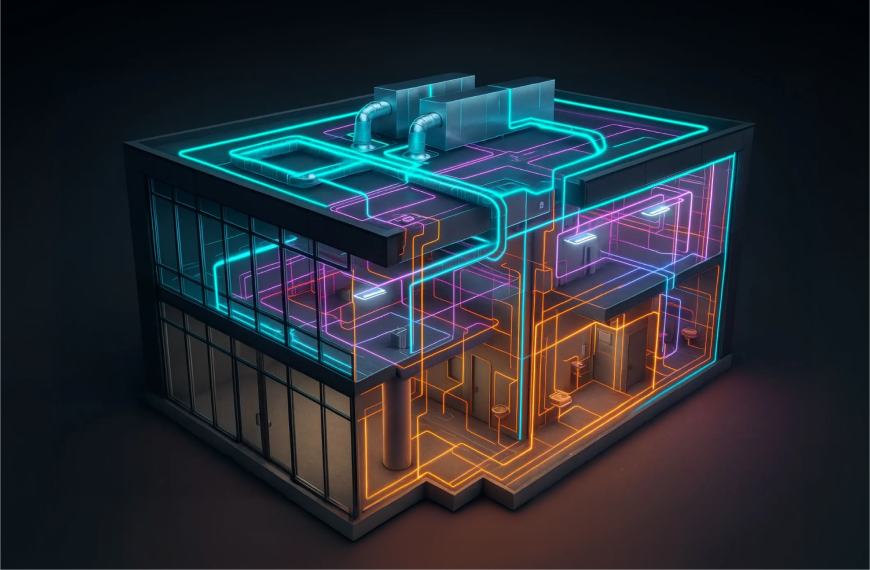
Mechanical, electrical, and plumbing (MEP) systems account for a significant portion of a building's total construction cost — and an even larger share of its operational expense over time. Getting these calculations right during the design phase is not just a matter of engineering accuracy; it directly impacts energy efficiency, occupant comfort, safety compliance, and long-term maintenance costs.
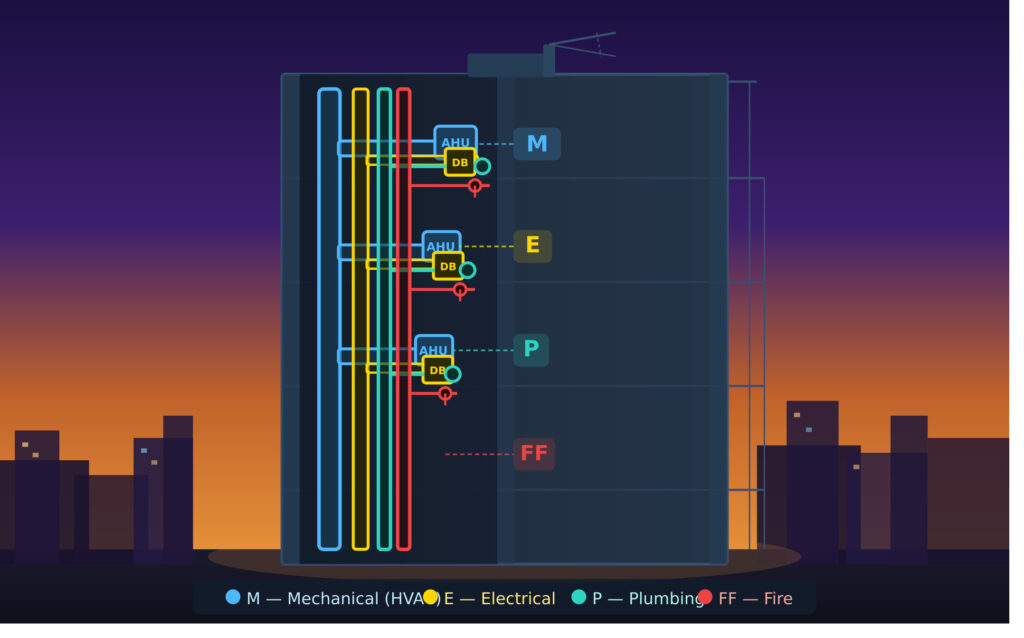
Yet for decades, MEP design has relied heavily on manual calculations, spreadsheet-based workflows, and siloed tools that struggle to keep pace with modern project complexity. That is changing rapidly. MEP calculation software powered by artificial intelligence is automating complex engineering computations across all four major building disciplines — electrical, HVAC, plumbing, and fire protection — while ensuring compliance with international standards and dramatically reducing turnaround time.
In this guide, we walk through exactly what modern MEP calculation software can do, how AI enhances each discipline, and how platforms like DesignDrafter's Building Design Calculation engine are helping engineers move from concept to validated design in a fraction of the traditional timeline.
MEP calculation software is a specialized engineering tool designed to automate the mathematical computations required when designing mechanical, electrical, plumbing, and fire protection systems for buildings. Rather than performing these calculations manually using spreadsheets, reference tables, and code books, engineers input building parameters — location, type, occupancy, area, and system requirements — and the software generates validated outputs aligned with applicable design standards.
The scope of calculations varies by discipline, but a comprehensive platform typically handles electrical load analysis, lighting design, breaker and cable sizing, HVAC heat load and ventilation calculations, duct and pipe sizing, plumbing fixture counts and drainage design, fire pump sizing, and sprinkler system hydraulics. The most advanced tools go further, integrating these calculations with AI floor plan generation and BIM automation to create a seamless design-to-documentation pipeline.
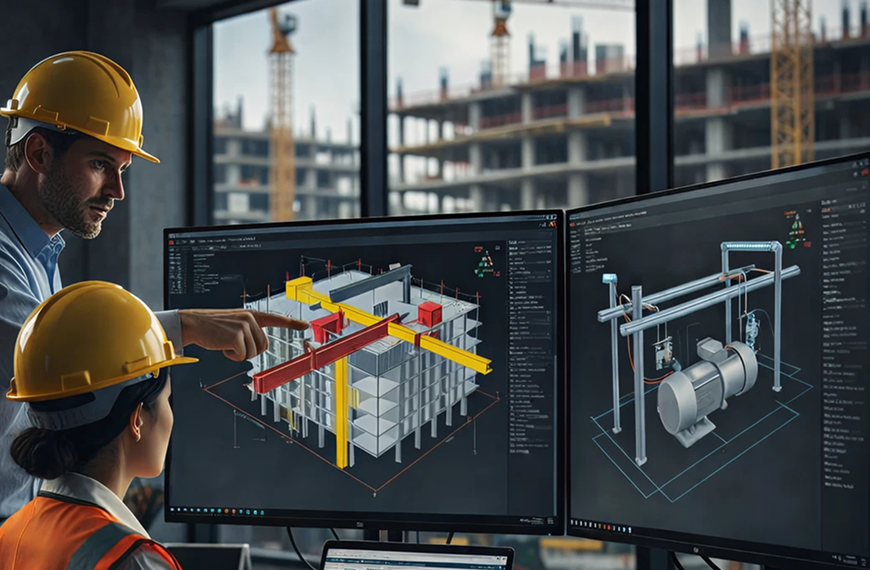
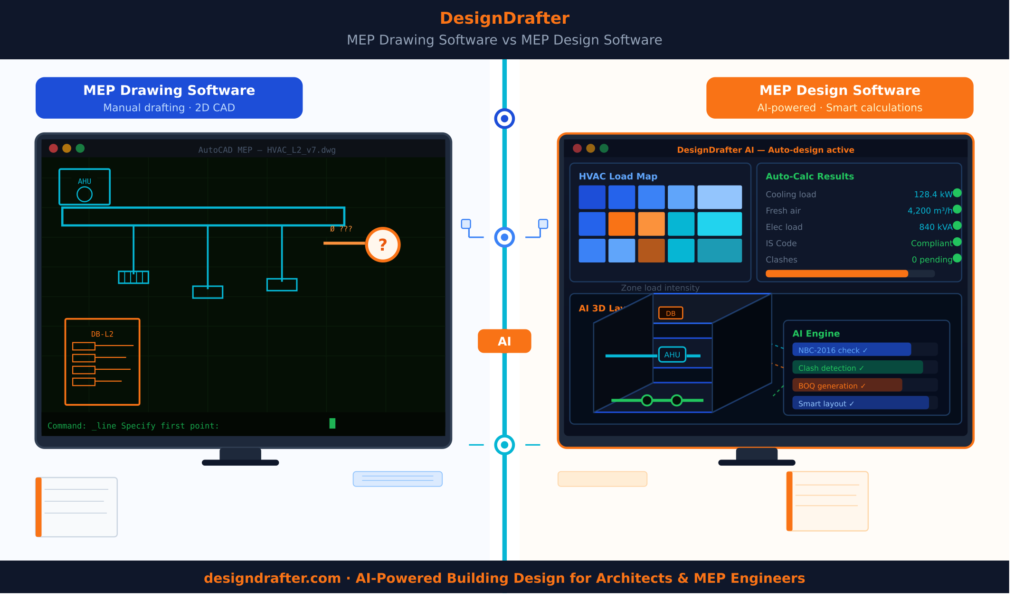
Traditional MEP calculation tools digitize the math but still depend on the engineer to define every input, interpret every code requirement, and manually coordinate between disciplines. AI-powered MEP calculation software fundamentally changes this dynamic in several important ways.
AI can evaluate thousands of design permutations simultaneously - optimizing pipe routes, duct configurations, and cable tray layouts against multiple constraints in seconds. Tasks that consumed days of manual analysis can now produce results within minutes.
Instead of checking code compliance after the design is complete, AI embeds standards like ASHRAE, NFPA, NEC, IPC, and regional building codes directly into the calculation engine. Non-compliance is flagged during design, not after construction begins.
MEP clashes - where a duct conflicts with a pipe run or an electrical conduit intersects a structural beam - are among the most expensive problems in construction. AI analyzes all building systems simultaneously, identifying potential clashes before they become costly field changes.
Advanced AI platforms incorporate real-time weather data, occupancy patterns, and energy performance models to suggest system configurations that minimize operational costs over the building's lifetime - not just during the initial design phase.
Electrical systems form the nervous system of any building, and errors in load analysis, cable sizing, or circuit protection can create serious safety hazards. AI-powered MEP calculation software automates the most critical electrical engineering computations with built-in validation against standards like NEC, IEC, and IS codes.
With DesignDrafter, each of these calculations is interconnected. When you update a load requirement, breaker sizes, cable selections, and DB configurations automatically adjust - eliminating the cascading manual revisions that plague traditional workflows.
Heating, ventilation, and air conditioning represent the single largest energy consumer in most commercial buildings. Accurate HVAC calculations directly determine occupant comfort, energy costs, and environmental impact. Modern MEP calculation software tackles the full range of HVAC engineering.
AI-driven HVAC calculations go beyond static analysis. The best platforms consider real-world climate data and occupancy patterns to right-size equipment - preventing the common problem of over-engineering that wastes capital and energy throughout the building's operational life.
Plumbing design requires balancing water supply adequacy, pressure consistency, drainage efficiency, and code compliance across potentially thousands of fixtures. Manual pipe sizing and pressure calculations for large buildings are extraordinarily time-consuming and error-prone.

Fire protection engineering carries some of the highest stakes in building design. Undersized systems, incorrect head loss calculations, or non-compliant sprinkler layouts can have catastrophic consequences. MEP calculation software automates fire protection design to standards, including NFPA 13, NFPA 20, NBC, and FM Global.
Hydrant and hose reel systems: Computes hydrant flow demand, standpipe pressure, and coverage requirements for multi-story buildings.
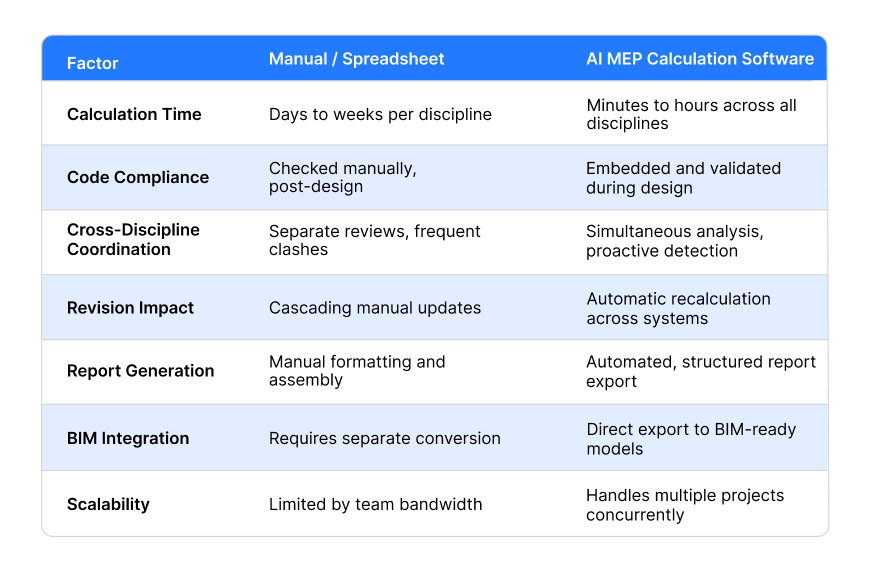
While many MEP tools address individual disciplines in isolation, DesignDrafter takes an integrated approach - connecting MEP calculations to every other phase of building design within a single AI-powered platform.
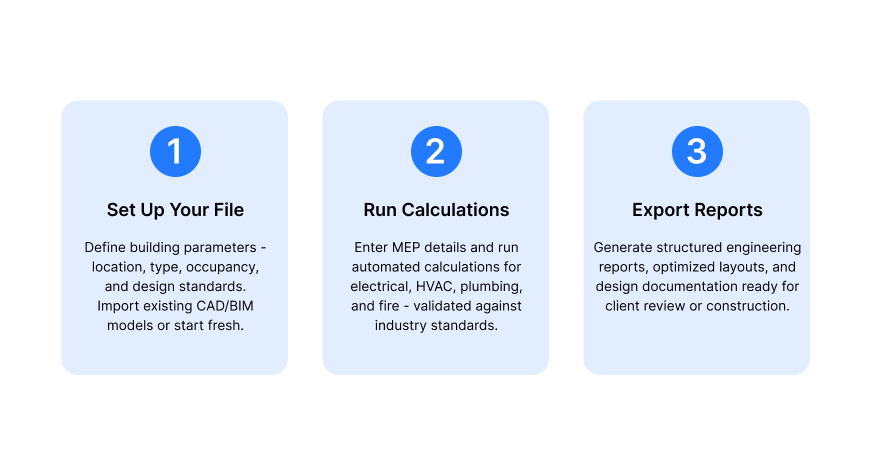
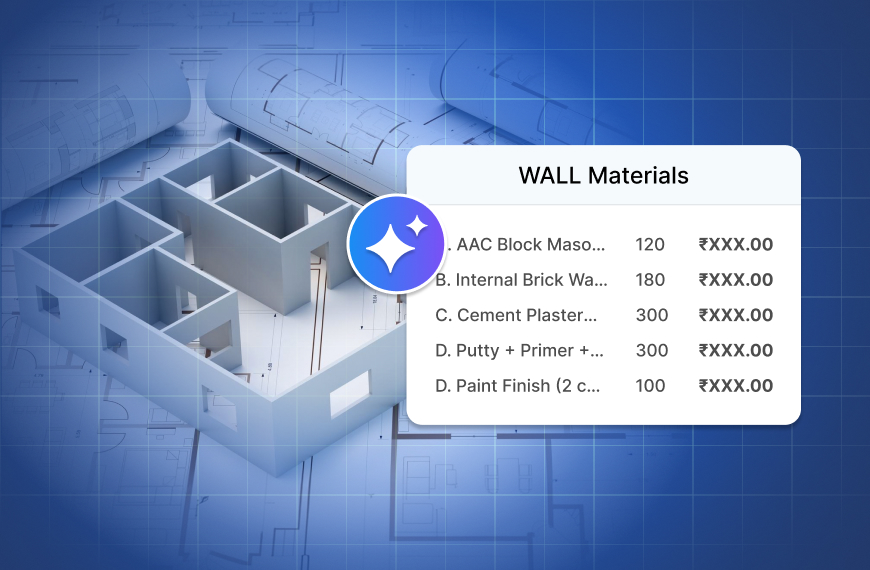
What makes DesignDrafter's MEP Design Calculation module particularly powerful is its connection to the broader platform. Your MEP calculations feed directly into automated quantity takeoffs for accurate BOQs, connect with smart BIM automation for construction-ready documentation, and integrate with technical product comparison tools to support data-driven equipment selection.
DesignDrafter provides tailored solutions for architects who need quick MEP feasibility checks, MEP consultants running detailed discipline-specific analyses, design firms managing multi-project portfolios, and contractors and EPC companies who need validated calculations to drive procurement and construction.
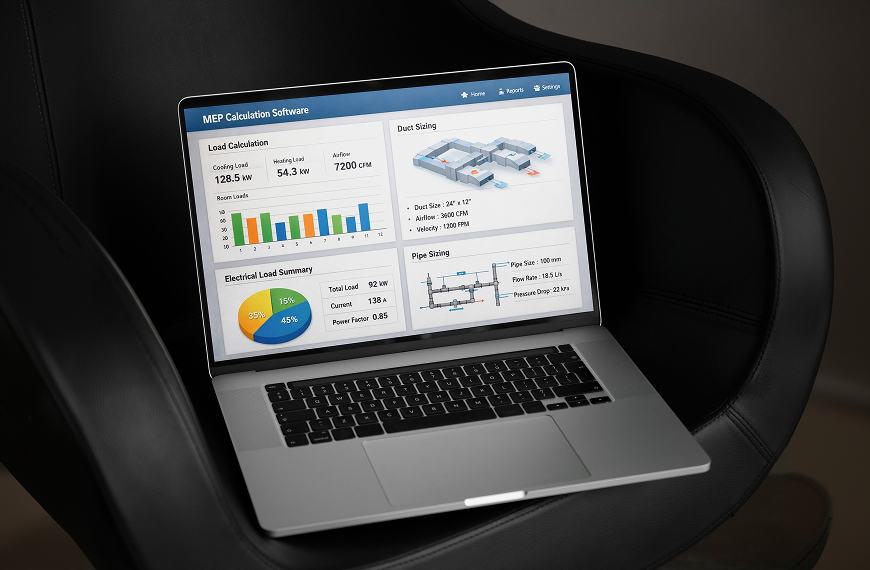
Not all MEP calculation software delivers the same depth or integration. When evaluating platforms, consider these factors.
Discipline coverage. Does the platform handle all four MEP disciplines - electrical, HVAC, plumbing, and fire - or only one or two? A unified platform eliminates data transfer errors between separate tools and ensures cross-discipline consistency.
Standards and code libraries. Verify that the software supports the specific codes applicable to your projects - ASHRAE, NFPA, NEC, IPC, UPC, IS codes, and relevant regional standards. Built-in compliance validation is far more reliable than post-design manual checks.
Integration with design and documentation tools. The greatest efficiency gains come when MEP calculations flow directly into floor plan layouts, BIM models, quantity takeoffs, and construction documentation without manual re-entry. Look for platforms that offer this end-to-end integration natively.
AI and automation capabilities. Evaluate whether the platform simply digitizes manual calculations or genuinely uses AI to optimize designs, detect clashes, and suggest improvements. The difference between a calculator and an intelligent design engine is significant.
Scalability and collaboration. For firms managing multiple concurrent projects, the platform should support team collaboration, concurrent calculations, and consistent output quality across projects without bottlenecking on individual specialists.
Run validated electrical, HVAC, plumbing, and fire protection calculations in minutes - with full code compliance built in.
May 4 , 2026
April 4 , 2026
May 7 , 2026