Compare equipment, fixtures, and materials across multiple brands based on technical specifications, performance metrics, compliance standards, and real-time pricing.
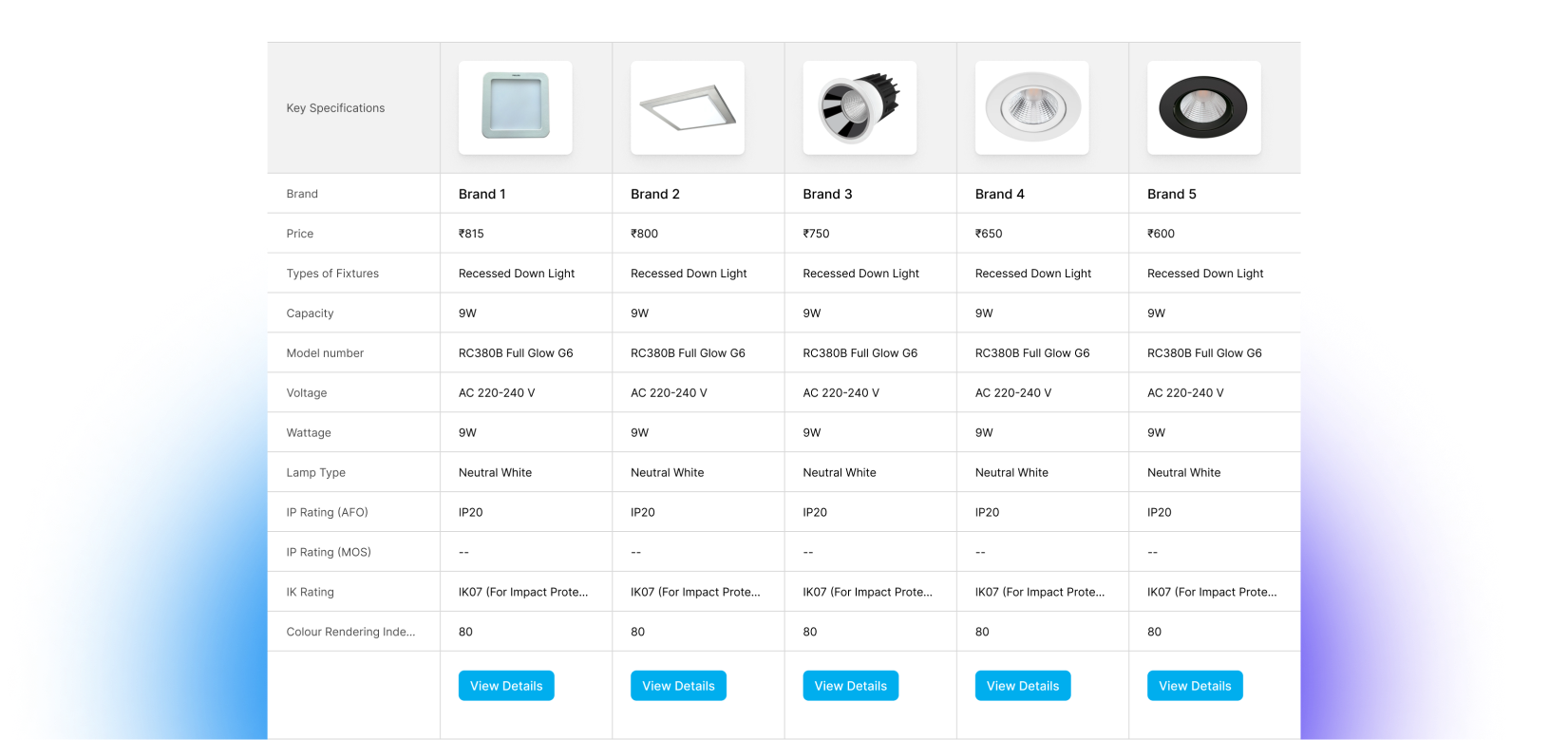


Enter specifications such as Building Type, location, service type, compliance standards, and budget range.

Choose the type of MEP product you want to compare Reply

The system pulls real-time product details, technical specifications, and pricing from various brands and suppliers.

Download a structured comparison report highlighting the best-suited product based on your project needs.
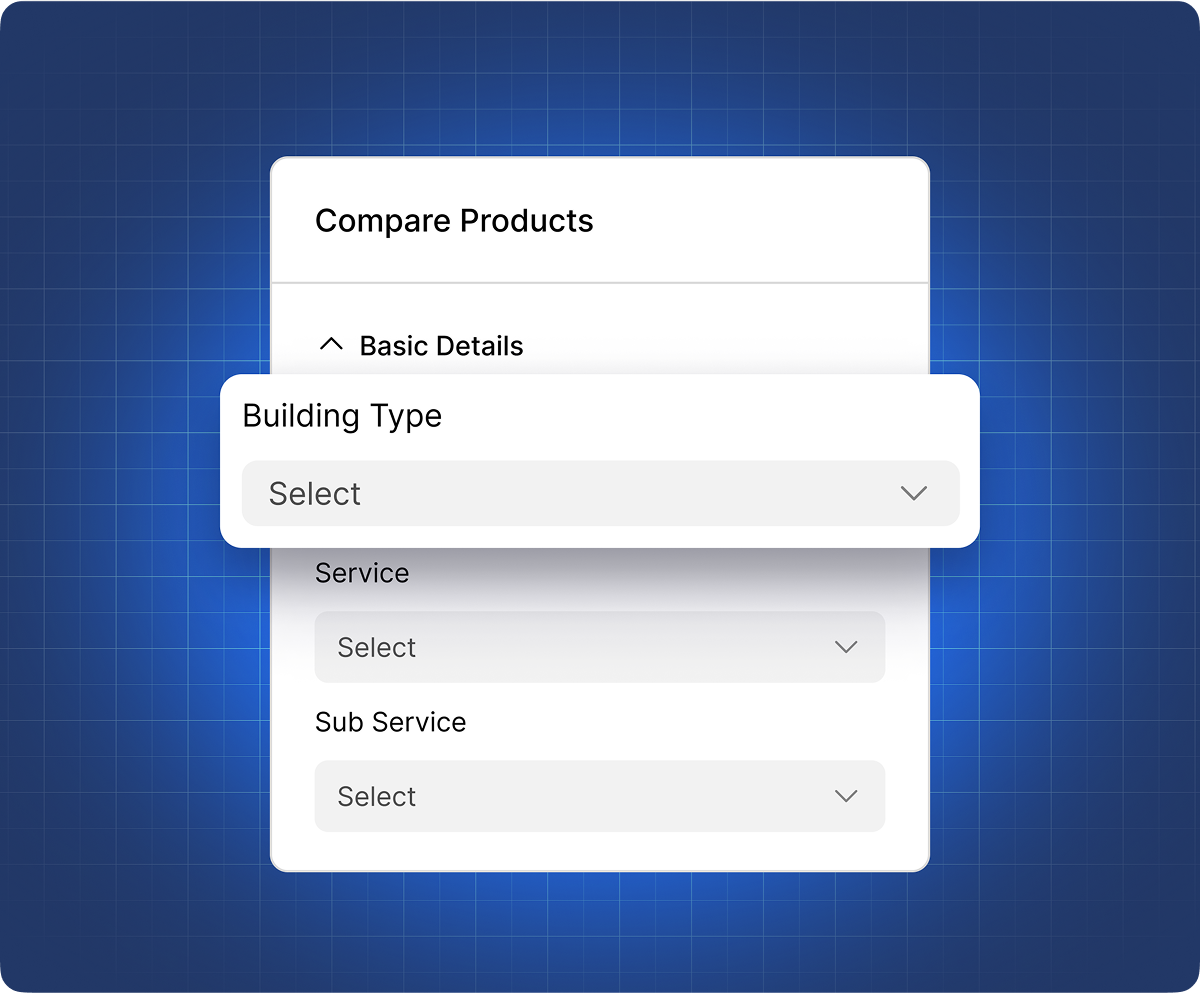

Before comparing products, it's essential to define the specific needs of your project. This step ensures that the selected MEP products align with the project’s technical, financial, and regulatory requirements.
Specify whether the project is a commercial building, residential complex, hospital, industrial facility, data center, airport, or any other infrastructure type. Different buildings have varying MEP requirements. Enter geographical details.
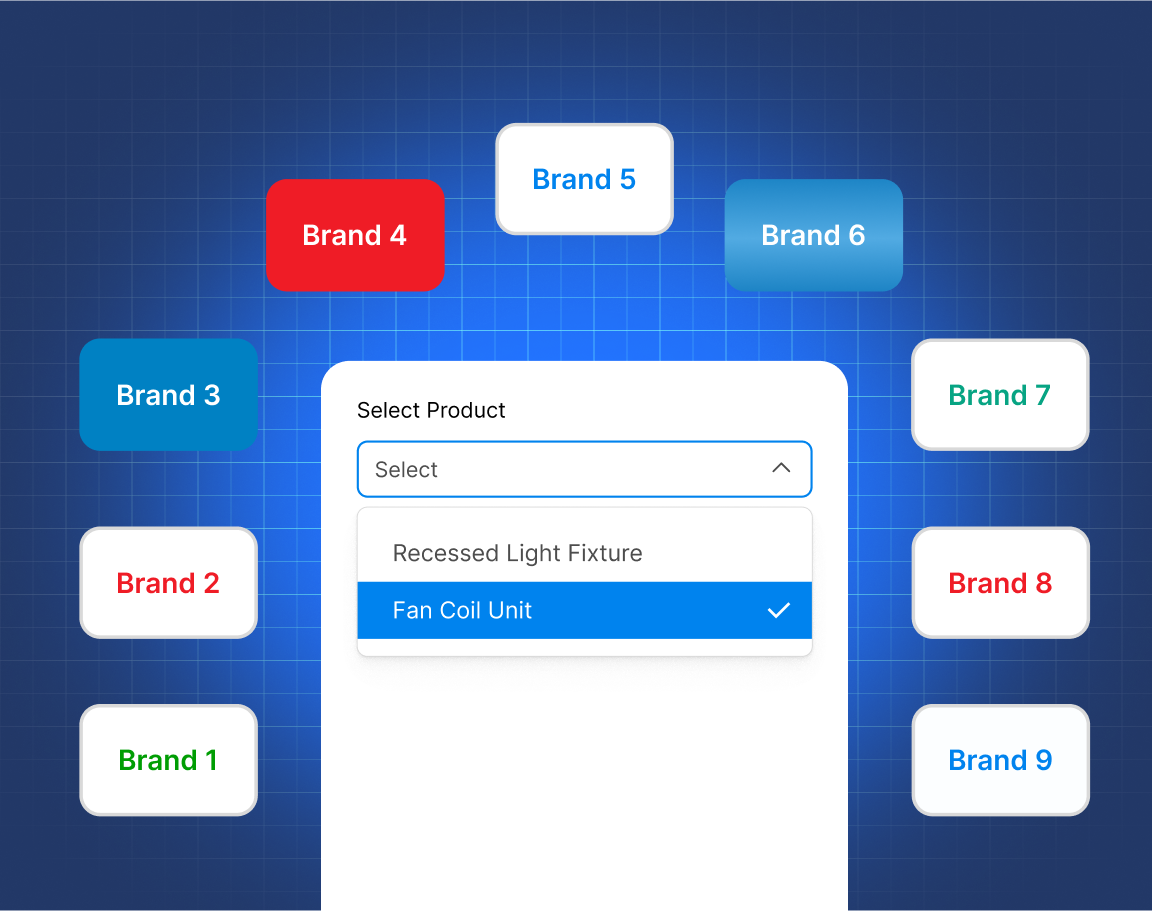

Once the project requirements are defined, the next step is to select the type of product needed and choose from available brands. This ensures that the comparison is based on relevant product categories and industry-leading manufacturers.
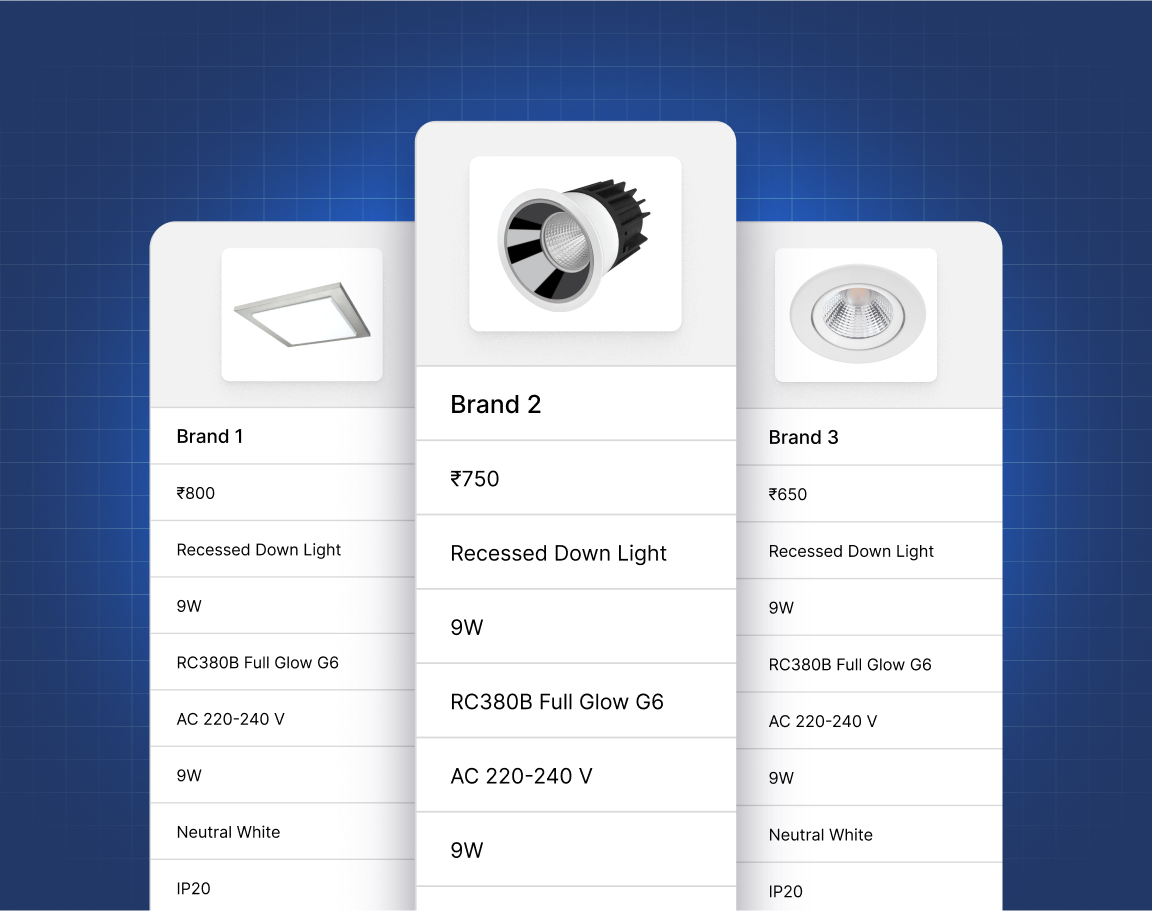

Once the product type is chosen, users can: Select a Preferred Brand, Compare Multiple Brands, Filter Based on Certification & Standards and Check Product Availability & Lead Time
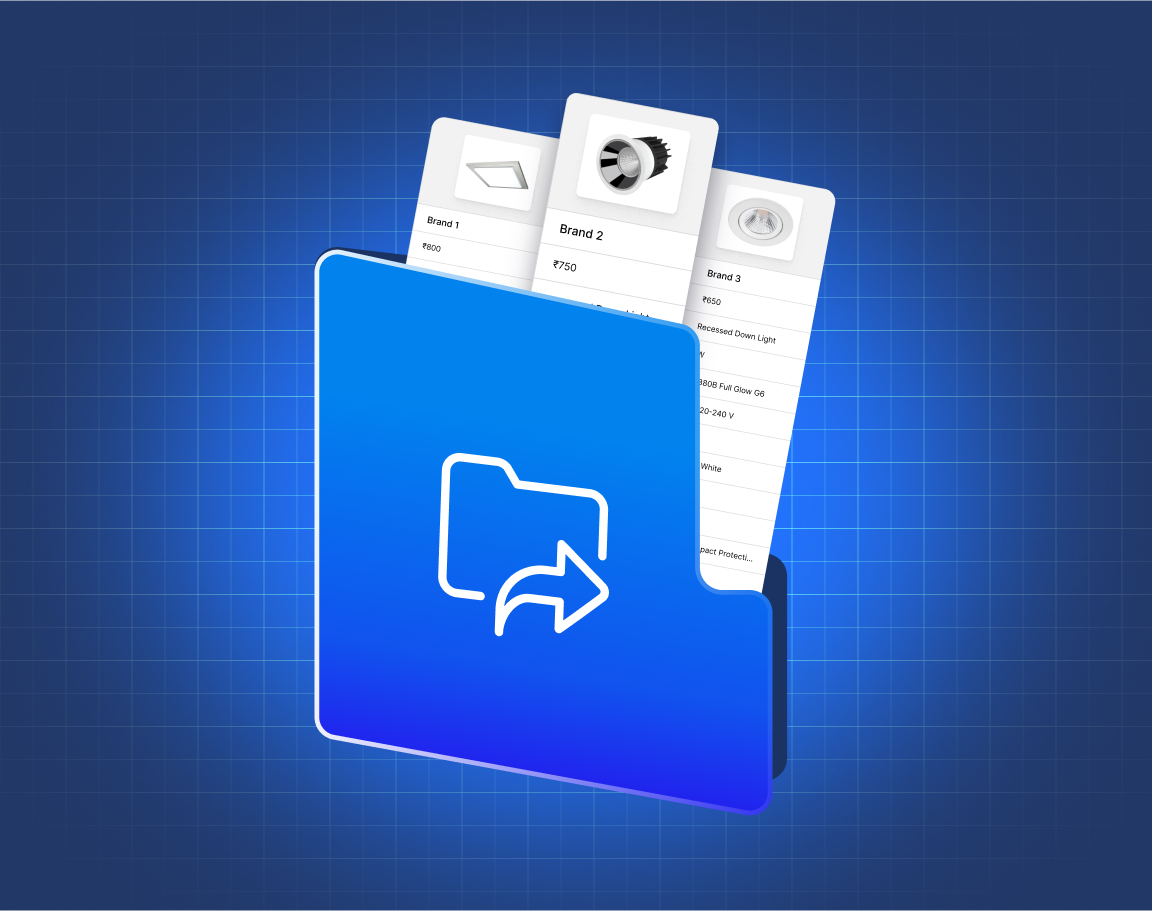

After selecting the product type, brands, and performing a detailed comparison, the final step is to generate and extract a comprehensive result report. This report provides key insights for decision-making in procurement, budgeting, and technical validation.
The system allows users to generate reports in multiple formats for ease of sharing and documentation.
Streamline your MEP designs with our clash detection and route
optimization feature. Our app spots clashes between building
elements and suggests smart rerouting solutions to reduce conflicts and
rework.




Blogs

March 27 , 2026
In this guide, how platforms like DesignDrafter’s Building Design Calculation engine are helping engineers move from concept to validated design in a fraction of the traditional timeline.

April 7 , 2026
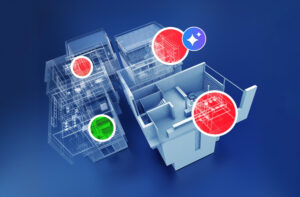
In this guide, we will walk through how clash detection works in MEP projects, why traditional methods fall short.

April 8 , 2026
In this guide, we will explore what digital twins actually are, how they work in a construction context, the real benefits they deliver for building owners and facility managers.

The MEP product comparison tool is a platform that allows engineers, architects, and consultants to compare mechanical, electrical, and plumbing equipment from multiple brands side by side against the specific technical and regulatory requirements of their building project, enabling faster and more confident product selection decisions.
In a typical Indian MEP project, an engineer who has completed HVAC load calculations then needs to select a chiller, AHUs, FCUs, pumps, and cooling towers that meet the calculated capacity requirements, comply with energy efficiency standards (ECBC, BEE star ratings), fit within the budget envelope, and are available from reliable suppliers in their region. Currently, this process involves visiting four or five separate brand websites, downloading individual product datasheets, manually cross-referencing specifications in a spreadsheet, and often going back and forth with local vendors to confirm availability and pricing. For electrical equipment, the same process repeats for panels, cables, switchgear, and lighting fixtures. For plumbing and fire fighting, it repeats again.
DesignDrafter’s MEP Product Comparison tool consolidates this fragmented, time-consuming process into a structured workflow where you define your project requirements once and the platform pulls real-time product details, technical specifications, and pricing from multiple brands simultaneously. The result is a structured comparison report that clearly identifies which product best meets your project’s technical, financial, and regulatory requirements, removing guesswork and manual research from MEP equipment selection entirely.
DesignDrafter’s MEP product comparison tool covers the full range of mechanical, electrical, plumbing, and fire fighting equipment used in Indian building projects, across both residential and commercial building types.
The comparison capability spans the following equipment categories:
For HVAC and mechanical systems, the platform covers chillers (air-cooled and water-cooled, centrifugal and screw), Air Handling Units (AHUs), Fan Coil Units (FCUs), VRF/VRV systems, split ACs and cassette units, cooling towers, pumps (chilled water, condenser water, hot water), ventilation fans and axial fans, and air distribution products including diffusers, grilles, and dampers.
For electrical systems, comparison covers distribution boards and MCCBs, low-voltage switchgear, automatic transfer switches (ATS), transformers, UPS systems, LED lighting fixtures (commercial, industrial, and emergency), cable manufacturers and cable types, and busbar trunking systems.
For plumbing systems, the tool compares pipes and fittings by material (CPVC, UPVC, GI, copper), water heaters and heat pumps, pressure booster pumps, water treatment equipment, and sanitary fixtures by brand and model.
For fire fighting systems, the comparison covers fire pumps (electric and diesel), jockey pumps, sprinkler heads by type and coverage, fire alarm and detection panels, gas suppression system equipment, and hydrant and hose reel cabinets.
The breadth of product categories means engineers working on a multi-discipline project can complete equipment selection for all systems within one platform environment, rather than conducting separate brand research exercises for each discipline. This connects naturally to the MEP design calculations that determined the equipment capacities, ensuring selected products match calculated requirements exactly.
The platform aligns product comparisons to your project by requiring you to define your building context before comparison begins, so every product’s suitability is evaluated against your actual project parameters, not against an abstract performance specification in isolation.
The project context definition step on DesignDrafter’s comparison tool captures the following inputs: building type (commercial office, residential complex, hospital, industrial facility, data center, hotel, airport, or custom), geographical location (which determines ambient conditions, local utility standards, and regional brand availability), service type (the specific MEP discipline and system being specified), applicable compliance standards (BEE star rating requirements, ECBC energy performance targets, NBC capacity norms, NFPA system ratings), and budget parameters.
Once these project details are entered, the comparison engine filters and ranks products not just by raw technical specifications but by how well each product fits your specific combination of building type, climate zone, compliance requirement, and budget. A chiller that is technically capable of meeting your calculated cooling load but does not achieve the BEE star rating required by ECBC for your building’s energy performance category is flagged accordingly, preventing a selection that would create compliance issues at the approval stage.
This project-contextual approach is fundamentally different from browsing individual brand websites or generic product databases, where the engineer must mentally cross-reference multiple parameters manually. The AI Design Agent can also execute product comparison tasks automatically as part of a broader design workflow, reading MEP calculation outputs and suggesting optimized equipment selections without the engineer having to manually re-enter the project parameters.
Yes, DesignDrafter’s MEP product comparison tool generates a structured export report that clearly presents the compared products, their technical specifications, compliance status, and the recommended selection based on your project requirements, formatted for direct use in client presentations, procurement inquiries, and project specification documents.
The export report is designed to serve three audiences simultaneously. For clients and project owners, the report presents equipment options in a readable format that communicates the key selection criteria (capacity, energy efficiency, brand, warranty, availability) without requiring engineering background, supporting informed client approval of the specified equipment.
For procurement teams, the report provides the precise technical specifications and brand/model details needed to issue requests for quotation to suppliers and vendors. Indian construction procurement often requires an approved vendor list (AVL) or specified-or-equal clauses in tender documents; the comparison report provides the technical basis for these procurement clauses.
For project documentation, the selection rationale captured in the comparison report serves as evidence that the most suitable product was systematically chosen based on defined technical and compliance criteria, which is important for quality management systems (ISO 9001 compliance in larger firms) and for defending specification choices during client or contractor queries.
The export is available in structured formats and, like all outputs on the DesignDrafter platform, connects to the rest of the project workflow. Selected equipment items feed directly into the Quantity Extraction and BOQ generation module, where brand-specific product entries replace generic equipment line items in the BOQ, creating a fully specified procurement document rather than a generic quantity schedule.
The platform filters and highlights energy performance data for HVAC and electrical equipment aligned with BEE (Bureau of Energy Efficiency) star rating requirements and ECBC (Energy Conservation Building Code) targets, helping engineers select equipment that meets India’s mandatory and voluntary energy efficiency standards without separate manual compliance checking.
BEE star ratings apply to a wide range of MEP equipment commonly specified in Indian buildings: air conditioners (room AC, cassette, and VRF systems), fans, pumps, transformers, lighting fixtures, and refrigeration equipment. ECBC sets minimum energy performance standards (EPS) for HVAC systems, lighting power density (LPD), and building envelope performance for commercial buildings above a defined connected load threshold.
When comparing HVAC equipment on DesignDrafter’s comparison tool, the energy efficiency parameters displayed include COP (Coefficient of Performance) and EER (Energy Efficiency Ratio) for cooling equipment, IPLV (Integrated Part Load Value) for chillers operating under part-load conditions which is the typical operating condition for most commercial buildings, and AHRI or BIS certification status confirming that published ratings are independently verified.
The comparison engine applies your project’s ECBC energy category and BEE minimum rating requirement as filters, so products that do not meet the applicable minimum standard are flagged or filtered out of the compliant selection range. This prevents the common situation where an engineer selects a lower-cost product that later fails energy compliance checks during building permit review, forcing a redesign. The compliance-first product selection connects to the HVAC design calculations module where the energy performance of the selected equipment feeds back into the ECBC compliance verification of the overall HVAC system design.
Yes, the platform compares products from both Indian manufacturers and international brands that are actively specified and supplied in the Indian MEP market, covering the full spectrum of equipment options that Indian engineers realistically consider during the specification process.
For HVAC equipment, the comparison covers major international brands widely present in India including Carrier, Daikin, Trane (Trane Technologies), Voltas (Tata), Blue Star, Hitachi, and Mitsubishi Electric, along with Indian manufacturers and regional brands for cost-sensitive or locally sourced specifications.
For electrical equipment, the tool covers major switchgear and panel brands including Schneider Electric, ABB, Siemens, Legrand, and Havells, alongside Indian manufacturers such as L&T Electrical, Crompton, and Polycab for cables and wiring systems.
For plumbing equipment, the comparison includes Grundfos, Wilo, Kirloskar, and KSB for pumps; Astral, Wavin, and Supreme for pipes and fittings; Hindware, Parryware, and Kohler for sanitaryware; and Racold, AO Smith, and Bradford White for water heating systems.
For fire fighting equipment, the comparison covers Grundfos and Kirloskar for fire pumps, Viking, Tyco, and Minimax for sprinkler systems, and Honeywell and Siemens for fire alarm systems.
The breadth of brand coverage means engineers can make genuine cross-brand comparisons rather than being steered toward a single brand ecosystem, which is the limitation of brand-specific selection tools like Carrier HAP or Daikin’s product selection software. The project-context filtering ensures that all brands are evaluated against the same project requirements, creating a level playing field for technical comparison. This connects to the DesignDrafter product comparison workflow where the export report documents the comparison basis transparently for client and procurement use.
The product comparison tool connects directly to the MEP design calculations module on DesignDrafter, creating a seamless workflow where calculated system requirements automatically become the selection criteria for equipment comparison, eliminating the manual step of re-entering engineering parameters into a separate product selection tool.
In a conventional MEP workflow, an engineer completes HVAC calculations in Carrier HAP, then opens a separate browser tab or vendor portal to search for a chiller that matches the calculated cooling load. The engineer manually inputs the load figure, efficiency requirement, and physical size constraints into the vendor’s selection tool and then compares a few options manually. This manual translation step between calculation output and product selection input adds time and introduces the risk of entering an incorrect or rounded figure.
On DesignDrafter’s platform, the HVAC heat load calculation produces a cooling capacity requirement, efficiency target, and physical constraints. These parameters carry forward directly into the product comparison tool as pre-filled selection criteria. The engineer confirms the parameters and initiates the comparison, with the platform pulling matching products from multiple brands simultaneously. The same workflow applies to electrical equipment selection from electrical design calculations, fire pump selection from fire fighting calculations, and pump selection from plumbing calculations.
The selected products then flow back downstream into the quantity extraction and BOQ generation process as specified items rather than generic equipment entries. This creates a complete, traceable chain from design requirement to calculation to equipment selection to BOQ, all within one platform, eliminating the disconnected tool-switching that characterizes conventional Indian MEP project workflows.
The MEP product comparison tool delivers the most value to three professional groups: MEP consultants specifying systems for commercial projects, procurement managers sourcing equipment for construction projects, and design firms advising clients on equipment selection and lifecycle costs.
For MEP consultants, the tool solves the specification research problem. After completing engineering calculations, consultants must specify equipment by brand, model, and performance parameters in the project specification document. Without a structured comparison tool, this research is conducted manually across brand websites, vendor quotes, and product datasheets, taking significant time on each project. The DesignDrafter comparison tool condenses this research into a structured session that produces a documented, defensible specification with a clear comparison basis.
For procurement managers and EPC contractors, the tool addresses the vendor selection challenge. When a tender specification lists equipment by performance criteria rather than specific brands, the procurement team must evaluate vendor submissions against the specification requirements. The comparison tool’s ability to filter products by technical criteria and generate side-by-side specification reports supports this evaluation process systematically. For EPC contractors who both design and procure, integrating specification and procurement in the same workflow reduces project delivery timelines.
For design firms advising clients on value engineering, the tool enables rapid exploration of specification alternatives. If a client requests a cost reduction on a specified HVAC system, the engineer can run a new comparison with adjusted cost parameters and present alternative equipment options with documented performance trade-offs within minutes, rather than returning to vendors for new quotes and manually re-evaluating options over several days.
Yes, DesignDrafter’s product comparison tool explicitly supports specialized building types including hospitals, data centers, airports, and industrial facilities, where MEP equipment selection involves additional technical constraints and regulatory requirements beyond standard commercial buildings.
Hospitals and healthcare facilities require MEP equipment that meets stringent reliability, redundancy, and infection control requirements. For HVAC, this means equipment with N+1 redundancy configurations, HEPA filtration compatibility, and precise temperature and humidity control for operating theatres, ICUs, and pharmaceutical storage. The comparison tool allows healthcare-specific performance parameters to be set as filters, ensuring only equipment meeting medical facility standards appears in the comparison results. This connects to MEP design calculations that reflect the higher ventilation rates and pressure differentials required in healthcare spaces.
Data centers require precision cooling (CRAC/CRAH units with tight temperature and humidity tolerances), high-reliability electrical infrastructure (UPS systems, static transfer switches, generator interface equipment), and fire suppression systems using clean agents rather than water. The comparison tool recognizes data center as a building type and applies the relevant technical filters and compliance standards to equipment comparisons.
Industrial facilities present their own specification challenges, including hazardous area classification for electrical equipment (ATEX/IECEx zones), high-capacity HVAC for process cooling, specialized plumbing for industrial process water systems, and deluge or foam suppression fire systems. Entering industrial facility as the building type on DesignDrafter’s platform activates the relevant technical and compliance filters for equipment comparison in these specialized categories. For teams working on complex multi-discipline industrial projects, the AI Design Agent can coordinate equipment selection across all disciplines simultaneously based on the project requirements defined at the start of the session.
The product comparison tool saves time by consolidating five or more separate research workflows into one structured session, and reduces specification errors by applying compliance filters and project-context alignment that manual research processes miss.
The time saving is quantifiable across the specification workflow. Traditional MEP equipment research for a medium commercial building involves: visiting 3 to 5 HVAC brand websites to download chiller selection data (30 to 60 minutes per brand), running brand-specific selection tools separately (30 to 60 minutes per tool), creating a manual comparison spreadsheet (1 to 2 hours), repeating the process for electrical, plumbing, and fire fighting equipment (1 to 2 days total), then formatting the comparison into a client-ready specification document (2 to 3 hours). The same outcome on DesignDrafter’s comparison platform is produced in a single session with structured outputs ready for export.
The error reduction comes from three sources. Compliance filtering prevents specifying equipment that fails BEE, ECBC, or NBC requirements. Project-context alignment prevents specifying equipment that is technically capable but wrong for the specific building type or climate zone. Structured side-by-side comparison prevents the common error of comparing products on different parameter bases because one product’s datasheet reports COP under full-load conditions while another reports IPLV, making them appear equivalent when they are not.
Together, these savings mean MEP consultants working through DesignDrafter’s integrated platform can complete equipment specification faster, submit more defensible specifications to clients and authorities, and reduce the revision cycles that occur when products are found to be non-compliant or poorly matched to the project requirements after the design is already advanced.