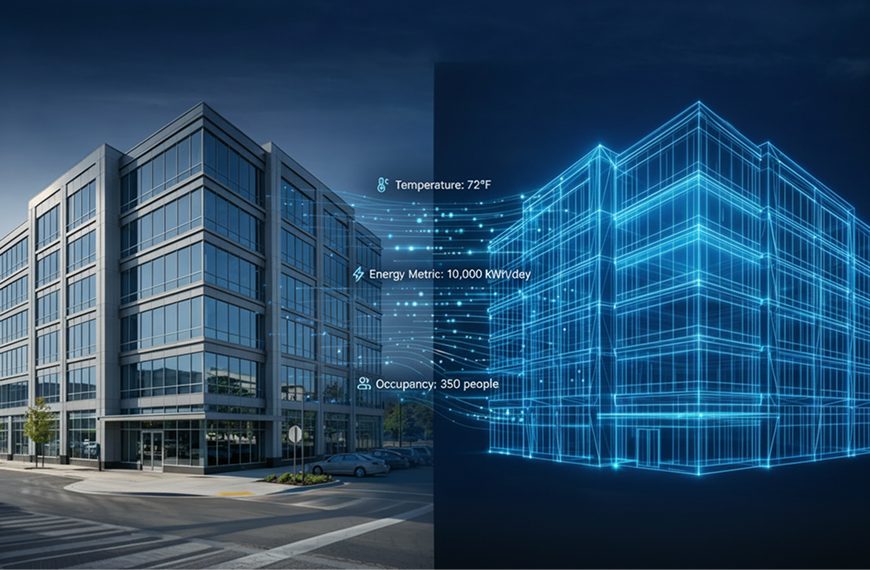
Imagine finishing a construction project and handing over more than just a physical building. Imagine delivering a living, breathing digital replica that mirrors every system, every component, and every performance metric of the real structure in real time. A replica that facility managers can use to monitor energy consumption, predict equipment failures before they happen, and plan renovations with complete knowledge of what is hidden behind every wall and above every ceiling. This is not science fiction. This is digital twin technology, and it is rapidly becoming one of the most valuable innovations in the construction and facility management industries.
For years, the AEC (Architecture, Engineering, and Construction) industry focused its technology investments on improving the design and construction phases. BIM models helped coordinate disciplines. AI tools accelerated calculations and drawing production. Automated quantity takeoffs made estimation faster and more accurate. But what happened after the building was finished? In most cases, the answer was surprisingly disappointing. The rich data contained in BIM models was archived, filed away, or simply lost during the handover process. Facility managers received a stack of PDF manuals, a set of as-built drawings, and a wish for good luck. All the intelligence that went into designing and building the structure effectively disappeared on day one of operations.
Digital twin technology in construction changes this completely. It creates a persistent, data-connected virtual model that stays alive and relevant throughout the entire lifecycle of a building, from initial design through decades of operation, renovation, and eventually decommissioning.
In this guide, we will explore what digital twins actually are, how they work in a construction context, the real benefits they deliver for building owners and facility managers, and why this technology is becoming essential for any firm that wants to deliver truly complete building solutions.
A digital twin is a virtual representation of a physical building that is connected to real-world data through sensors, building management systems, and IoT (Internet of Things) devices. It is not just a static 3D model. It is a dynamic, data-rich replica that reflects the current state and performance of the actual building in real time.
The concept originated in manufacturing, where digital twins of industrial equipment allowed engineers to monitor machine health, predict failures, and optimize maintenance schedules. The construction industry has adapted this concept to buildings, where the scale is larger, the systems are more complex, and the operational lifespan is measured in decades rather than years.
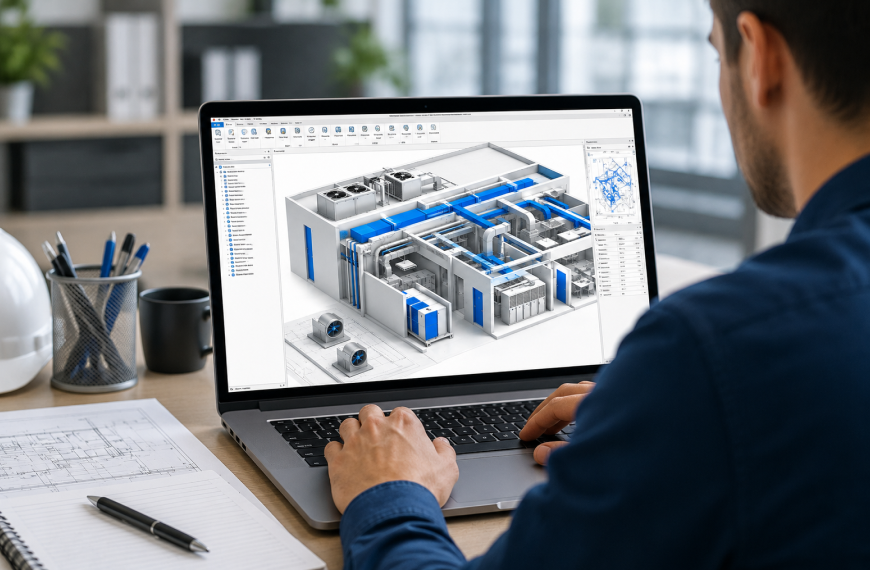
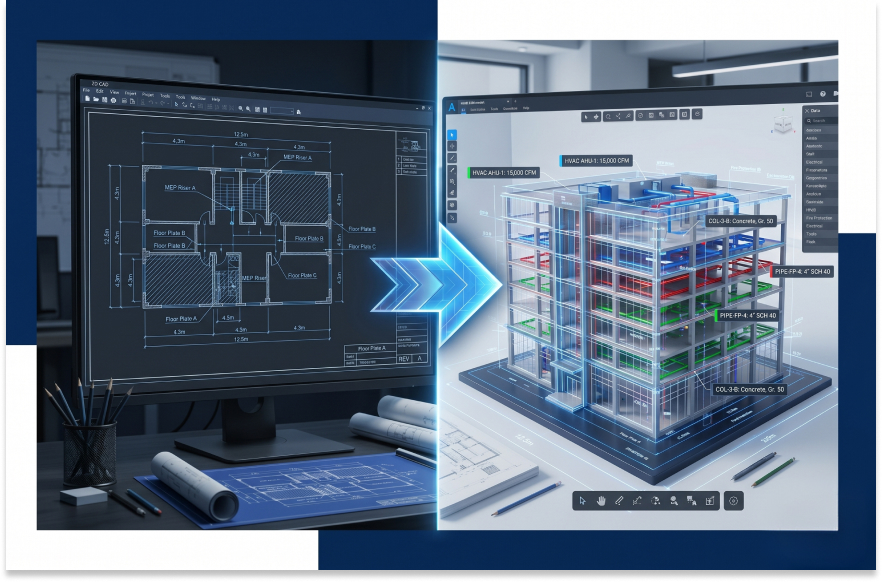
A construction digital twin typically starts as a BIM model created during the design phase. This model already contains geometric information and parametric data about every building element, from walls and structural members to MEP systems and finishes. During construction, the model is updated to reflect actual field conditions, creating an accurate as-built representation.
The transformation from BIM model to digital twin happens when this as-built model is connected to live operational data. Temperature sensors feed real-time readings into the HVAC zones of the model. Electrical meters report energy consumption by floor and by system. Occupancy sensors track how spaces are actually being used versus how they were designed to be used. Water flow meters monitor plumbing system performance.
This combination of geometric accuracy, parametric intelligence, and live data connectivity is what makes a digital twin fundamentally different from a traditional BIM model. The BIM model tells you what the building was designed to be. The digital twin tells you what the building actually is, right now, in this moment.
The impact of digital twin thinking begins long before the building is operational. It is reshaping how projects are planned, designed, and constructed.
During the design phase, a digital twin approach allows engineers to simulate how the building will perform under real-world conditions before a single foundation is poured. Instead of relying solely on design calculations (which assume ideal conditions), teams can model actual weather patterns, occupancy scenarios, and usage profiles to validate that their HVAC sizing, electrical loads, and plumbing capacity will hold up in practice.
This simulation capability catches design issues that traditional calculations miss. A building might be perfectly designed for average conditions but struggle during peak summer heat waves or during special events that push occupancy beyond normal levels. Digital twin simulation reveals these vulnerabilities early enough to address them in the design rather than discovering them after occupancy.
During the construction phase, digital twin technology creates a real-time connection between the design model and the actual building being constructed. As work progresses, the model is updated to reflect installed conditions, including any field modifications, substitutions, or deviations from the original design.
This continuous comparison between the planned model and the actual construction catches discrepancies early. If an MEP contractor installs ductwork at a different elevation than specified, the digital twin highlights the variance before it creates cascade problems with other trades. This is coordination that extends from the virtual world into the physical one.
The handover phase is where digital twins deliver perhaps their most transformative value. Traditional project handover involves transferring a set of documents: as-built drawings, equipment manuals, warranty information, and maintenance schedules. These documents are often incomplete, difficult to navigate, and quickly become outdated.
A digital twin handover is fundamentally different. The facility owner receives a living model that contains not just the geometric representation of the building but also the operational data connections, maintenance history, equipment specifications, and performance benchmarks that make ongoing facility management intelligent and efficient.
The operational phase of a building's life is where digital twin technology truly shines. Buildings are operated for decades, and the decisions made during those years have an enormous cumulative impact on cost, comfort, and sustainability.
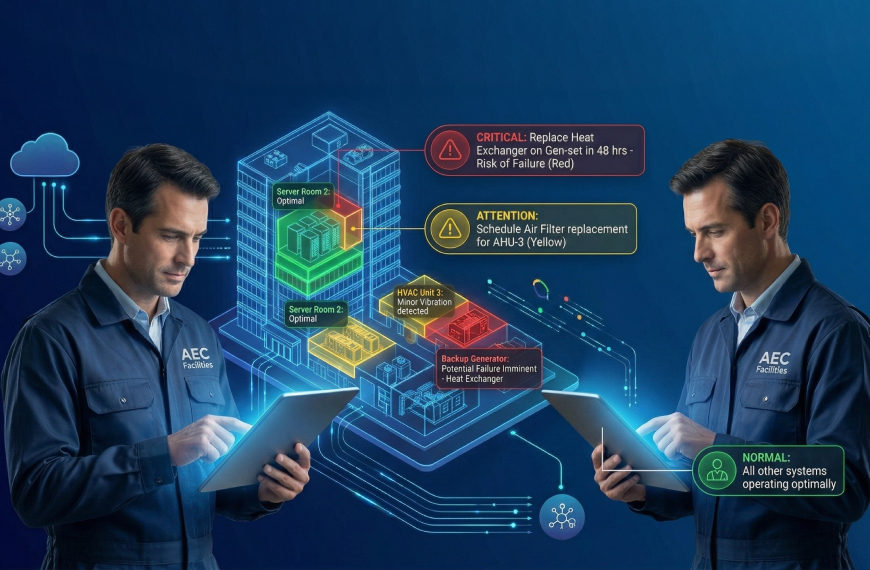
Traditional building maintenance follows a calendar-based schedule. HVAC filters are changed every three months. Pumps are inspected every six months. Electrical panels are tested annually. This approach is simple but inefficient. Some equipment gets maintained before it actually needs attention (wasting money), while other equipment deteriorates between scheduled checks and fails unexpectedly (causing disruption and emergency repair costs).
Digital twins enable predictive maintenance by monitoring equipment performance data continuously. When a pump starts drawing more current than normal, or an air handling unit begins losing efficiency, the digital twin identifies the trend before it becomes a failure. Maintenance teams can intervene at exactly the right time, preventing both unnecessary routine maintenance and costly emergency repairs.
Energy costs represent one of the largest ongoing expenses for commercial buildings. Digital twins provide the granular, real-time visibility needed to identify and eliminate energy waste.
The system can reveal that certain HVAC zones are overcooling unoccupied spaces, that lighting schedules do not match actual usage patterns, or that equipment is running during periods when it is not needed. By continuously comparing actual energy performance against design benchmarks and occupancy data, the digital twin identifies optimization opportunities that would be invisible without this level of data integration.
Over the operational life of a building, these energy savings compound into significant cost reductions and meaningful environmental impact. DesignDrafter's HVAC and electrical design calculation tools lay the groundwork for this kind of energy performance visibility from the earliest design stages.
How people actually use a building rarely matches how it was designed to be used. Conference rooms designed for twelve people might consistently host groups of three. Open-plan work areas might be underutilized on certain days while overflowing on others. Common spaces might see peak usage at times that do not align with building system schedules.
Digital twins with occupancy sensing provide the data needed to understand actual space utilization patterns. This intelligence supports better decisions about space configuration, furniture investment, lease management, and future renovation planning.
When a building eventually needs renovation or systems upgrade, the digital twin provides something that traditional documentation never could: a complete, accurate, and current understanding of what exists within the building.
Instead of sending survey teams to map existing conditions (a process that is expensive, disruptive, and often incomplete), renovation planners can explore the digital twin to understand exactly where every pipe, duct, conduit, and structural member is located. This dramatically reduces the uncertainty and risk that typically characterize renovation projects. DesignDrafter's CAD-to-Revit conversion capability plays a key role here, making it easier to digitize existing building documentation into an accurate, queryable model.
A functioning construction digital twin combines several technology layers that work together to create the complete picture.
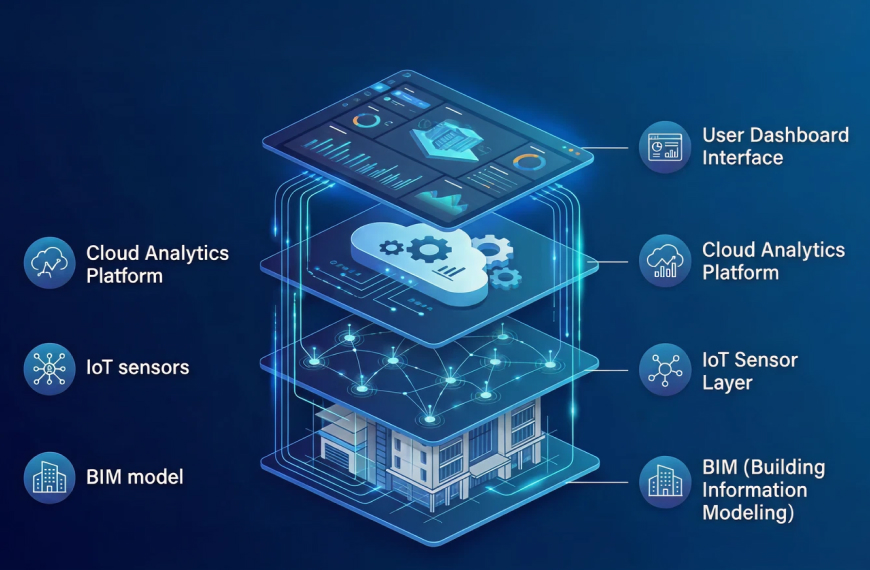
The geometric and parametric model, typically created in tools like Revit and exported as IFC files, provides the structural backbone of the digital twin. This is the 3D representation that gives spatial context to everything else. Without an accurate, well-organized BIM model, a digital twin has no framework to build upon.
The live data connection comes from IoT sensors distributed throughout the building and from integration with the building management system (BMS). Temperature sensors, humidity monitors, air quality meters, electrical meters, water flow sensors, occupancy detectors, and equipment vibration sensors all feed data into the digital twin platform.
The key is that these data streams are mapped to specific locations and systems within the 3D model. A temperature reading is not just a number. It is a number associated with a specific zone on a specific floor, connected to the HVAC equipment that serves that zone and influenced by the thermal properties of the surrounding building envelope.
The data processing, storage, and analytics happen on a cloud platform that aggregates sensor data, performs trend analysis, generates alerts, and powers the visualization interface. Machine learning algorithms within this platform are what enable predictive capabilities, learning from patterns in the data to anticipate future conditions and equipment needs.
The user interface allows facility managers, engineers, and building owners to interact with the digital twin. This might be a web-based 3D viewer, a mobile application, or even an augmented reality overlay that allows on-site technicians to see hidden building systems through their device camera.
Digital twin technology is not limited to futuristic mega-projects. It is becoming practical and valuable for a wide range of building types and stakeholders.
Building Owners and Developers benefit from the long-term operational savings and the enhanced asset value that comes with a digitally documented, intelligently managed building. The upfront investment in digital twin infrastructure pays dividends over decades of reduced operating costs and better maintenance outcomes.
Facility Management Companies gain a powerful tool for managing their building portfolios more efficiently. Digital twins provide the visibility and predictive capability that allow smaller teams to manage larger portfolios without sacrificing service quality.
Architects and Design Firms who embrace digital twin thinking differentiate their services by delivering buildings that perform better over their entire lifecycle, not just on paper during the design phase. This lifecycle perspective is increasingly valued by informed clients and institutional building owners.
MEP Consultants find that digital twin projects demand higher-quality, more data-rich models from the design phase onward. This creates an opportunity to deliver premium engineering services that extend beyond traditional design scope into commissioning support, performance monitoring, and ongoing optimization consulting.
Contractors and EPC Firms that can deliver digital-twin-ready buildings position themselves as technology leaders in an industry that is rapidly moving toward data-driven construction and operations.
While the benefits are compelling, digital twin adoption does come with challenges that firms should understand and plan for.
Data standardization remains an ongoing challenge. Different sensors, systems, and platforms often use different data formats and communication protocols. Ensuring that all data sources can be reliably integrated into a single digital twin platform requires careful planning and sometimes custom integration work.
The quality of the initial BIM model matters enormously. A digital twin built on an inaccurate or incomplete model will produce unreliable results. This means that firms need to invest in accurate modeling practices from the design phase onward, including proper as-built documentation during construction. DesignDrafter's Smart BIM Automation tools are specifically designed to raise the quality and completeness of models used in downstream workflows like digital twins.
Organizational change is perhaps the biggest challenge. Digital twin technology requires collaboration between teams that have traditionally operated independently, including design, construction, IT, and facilities management. Breaking down these silos and establishing shared data governance practices takes leadership commitment and cultural change.
Cost is a consideration, though it is increasingly becoming less of a barrier. The sensor hardware, cloud platform subscriptions, and integration services represent real investment. However, the operational savings typically deliver a positive return within the first few years, and the costs continue to decline as the technology matures.
The digital twin concept is evolving rapidly, and several trends point to an even more impactful future.
We will see deeper integration between digital twins and AI-powered design tools, where operational performance data from existing buildings directly informs the design of new ones. Imagine a design platform that automatically applies lessons learned from thousands of operational buildings to optimize the layout, systems, and specifications of your next project.
Autonomous building operations are coming, where digital twins do not just inform human decisions but actively control building systems in real time, continuously optimizing energy use, comfort, and maintenance without manual intervention.
City-scale digital twins will connect individual building models into neighborhood and district-level simulations, supporting urban planning decisions, infrastructure investment, and community-level sustainability initiatives.
For professionals in architecture, engineering, construction, and facility management, digital twin technology represents one of the most significant opportunities to add value and differentiate their services in the years ahead.
Digital twin technology in construction is bridging the gap between how buildings are designed and how they actually perform. By creating a persistent, data-connected virtual model that lives alongside the physical building, digital twins unlock decades of operational value that traditional project delivery simply leaves on the table.
For building owners, the benefits are measured in reduced energy costs, fewer equipment failures, smarter space utilization, and more confident renovation decisions. For design and engineering firms, digital twins represent an opportunity to extend their value proposition beyond project completion and into the full lifecycle of the buildings they create.
The technology is here, it is practical, and it is being adopted by forward-thinking firms across the industry. The question is not whether digital twins will become standard practice in construction. The question is how soon your firm will start delivering them. DesignDrafter is built to help you get there — from intelligent design and BIM automation to the data-rich models that make digital twin delivery possible.
FAQ

A digital twin in construction is a virtual replica of a physical building that is connected to real-time data from sensors and building management systems. It goes beyond a static 3D model by continuously reflecting the current performance, condition, and operational status of the actual building throughout its entire lifecycle.
A BIM model is a data-rich 3D representation created during the design and construction phases. A digital twin takes that BIM model and connects it to live operational data, making it a dynamic, continuously updated representation of the building as it exists and performs in real time. The BIM model is a snapshot; the digital twin is a living system.
Commercial office buildings, healthcare facilities, data centers, educational campuses, and large mixed-use developments see the most immediate benefits because they have complex MEP systems, high energy consumption, and long operational lifespans. However, the technology is becoming increasingly practical for mid-size buildings and even residential projects as costs decrease.
Costs vary depending on building size, system complexity, and the extent of sensor deployment. The investment includes sensor hardware, cloud platform services, integration work, and ongoing data management. Most building owners see a positive return within the first few years through energy savings, reduced maintenance costs, and better operational efficiency.
Digital twins can absolutely be implemented in existing buildings. The process involves creating an as-built BIM model (or updating existing documentation), installing IoT sensors, and connecting building management systems to the digital twin platform. While new construction offers the advantage of building the model and sensor
Digital twins aggregate data from multiple sources including temperature and humidity sensors, electrical energy meters, water flow meters, occupancy sensors, air quality monitors, equipment vibration and performance sensors, and building management system data. This data is mapped to specific locations and systems within the 3D model to provide spatial context and enable meaningful analysis.
Digital twins provide the real-time energy performance visibility needed to identify and eliminate waste, optimize HVAC and lighting schedules based on actual occupancy, track sustainability metrics against targets, and support green building certifications that require ongoing performance documentation. The continuous monitoring capability ensures that sustainable design intentions translate into actual operational performance.
March 27, 2026
June 16, 2026
April 27, 2026