In Short
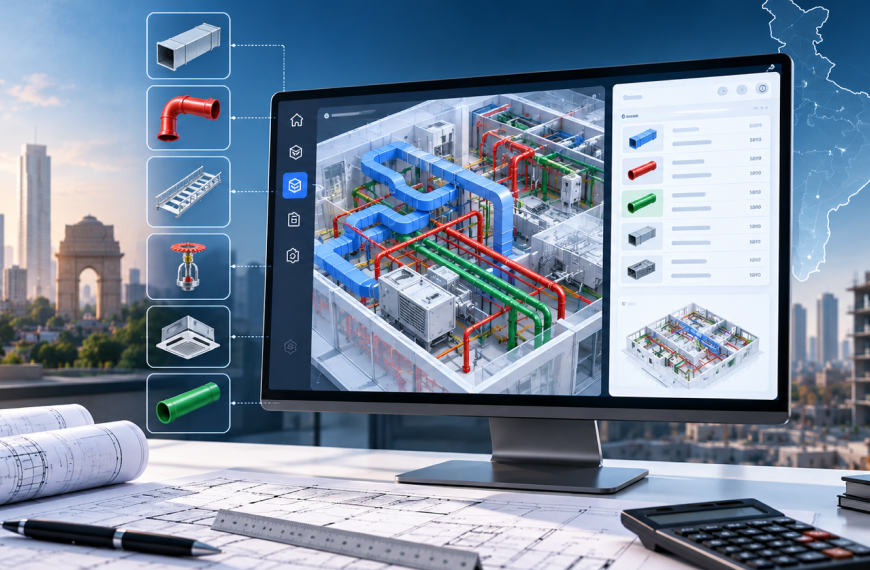
The best MEP quantity takeoff software for Indian consultants in 2026 depends on scope: DesignDrafter covers HVAC, electrical, and plumbing takeoff together with Indian BOQ formats and INR pricing, while Countfire and Trimble Accubid specialize in electrical takeoff only. CostX suits larger firms with bigger budgets, and ibeam.ai offers general AI-based takeoff without India-specific localization. Manual MEP takeoff typically takes 15 to 20 hours on a mid-sized project, which automated tools can cut to a few hours. Consultants handling all three MEP disciplines generally benefit most from a single unified platform.
If you're an MEP consultant in India, quantity takeoff is probably eating more of your week than you'd like. Between HVAC ducting, electrical points, and plumbing runs, manual measurement adds up fast, and one missed count can throw off an entire BOQ. This is exactly why more consultants are switching to MEP estimation software India teams can actually trust for accuracy.
In this guide, I'll walk through what to look for in MEP BOQ software, compare a few of the better known tools, and point out where HVAC takeoff software and electrical quantity takeoff tools actually differ. No fluff, just what matters if you're choosing software this year.
MEP estimation software is a tool that measures quantities directly from drawings (ducting, wiring, pipework, fixtures) and turns them into a BOQ, instead of a consultant counting each item by hand. It matters because manual takeoff on a mid-sized project can easily run 15 to 20 hours, and every hour spent counting is an hour not spent reviewing the design itself.
This is really what separates decent MEP estimation software India options from the rest: the software also needs to handle local BOQ formats and IS-code based specifications, not just generic international templates. A tool that's excellent in the US or UK market can still fall short here, and a look at construction software adoption in India shows local format support is one of the biggest reasons firms switch tools.
Before picking a tool, run through this short checklist:
Here's an honest look at some of the better known options, including where each one actually fits.
| Software | Best For | India Fit |
| DesignDrafter | Full MEP takeoff (HVAC, electrical, plumbing) with BOQ export | Built for India, INR pricing, IS-code aware |
| ibeam.ai (Beam AI) | AI-based quantity takeoff, general construction | No India-specific localization |
| CostX (Exactal) | Detailed BOQ and cost planning at scale | Used in India, but priced for larger firms |
| Countfire | Electrical quantity takeoff specifically | Strong for electrical, not full MEP |
| Trimble Accubid | Electrical and mechanical estimating | Popular internationally, limited India presence |
DesignDrafter covers all three MEP disciplines in one place, which matters if your consultancy handles HVAC, electrical, and plumbing takeoff on the same project instead of running separate tools for each. The MEP consultants solution is built specifically around that workflow. If you want a deeper look at cost estimating tools generally, our construction cost estimating software guide covers the broader category.
Countfire and Trimble Accubid are genuinely good at what they do, but they're built around electrical takeoff specifically. If your work is mostly electrical BOQ, either is worth a look. CostX is powerful but tends to suit larger firms with bigger budgets, and general construction takeoff tools rarely go deep enough on MEP-specific measurement. ibeam.ai has decent general takeoff features, but nothing built for Indian formats or code references.
HVAC takeoff software measures duct lengths, fittings, and equipment counts from mechanical drawings, while electrical quantity takeoff tools count wiring runs, points, panels, and fixtures from electrical layouts. Good HVAC takeoff software India teams can rely on also needs to handle local duct sizing conventions, not just generic international ones. They solve different measurement problems, which is why some tools specialize in just one.
This distinction matters when you're choosing software. A tool built only for electrical quantity takeoff, like Countfire, won't help much with your HVAC ducting counts, and vice versa. If your consultancy handles both disciplines, you either need two specialized tools or one platform built to do both without switching between separate programs for every project.
From working with consultants making this switch, the pattern is consistent: it's rarely about replacing judgment, it's about cutting the hours spent on repetitive counting so more time goes into checking the design itself. A BOQ that used to take two full days now often takes a few hours, with the consultant reviewing output rather than starting from a blank sheet.
That's the gap DesignDrafter was built to close: MEP estimation software India consultants can use for HVAC, electrical, and plumbing takeoff together, with output formatted the way Indian projects actually need it. If you're comparing options this year, it's worth testing your own drawings against a couple of tools before deciding. You can check pricing to see what fits your consultancy.
References & sources
Citations that back the claims in this post.
Countfire, best electrical estimating software guide:
countfire.com
BuildVision AI, best construction takeoff software 2026:
buildvisionai.com
Construction Estimator India, top construction software in India 2026:
constructionestimatorindia.com
Founder
Manas Krishna is a Mechanical Engineer and infrastructure technology entrepreneur with 20+ years of experience in MEP (Mechanical, Electrical, and Plumbing) engineering, public health engineering, and transport infrastructure projects across India.
FAQ

MEP quantity takeoff software measures HVAC, electrical, and plumbing quantities directly from project drawings and generates a bill of quantities automatically. It replaces manual counting, which typically takes 15 to 20 hours on a mid-sized project, with a process that finishes in a fraction of the time.
The best choice depends on your firm’s needs, but for consultants handling all three MEP disciplines with Indian BOQ formats and INR pricing, DesignDrafter is built specifically for that. Firms doing electrical work only might prefer a specialized tool like Countfire instead.
Automated MEP BOQ software is generally more accurate for large quantities, since manual counting on complex drawings commonly runs 3 to 5 percent off due to human error. Software still needs a final review, but it removes most of the repetitive counting mistakes manual takeoff is prone to.
Start by running one completed project through the software and comparing its BOQ against your manual version. This shows you exactly where the tool is accurate and where it needs manual correction, before you commit to using it online project.
This usually happens when drawings aren’t scaled or labeled correctly before import, or when the software’s rate database hasn’t been updated for current material costs. Check your drawing setup first, since most takeoff errors trace back to input quality rather than the software itself.
Only if your firm specializes in just one discipline. If you handle full MEP scope, a single platform covering HVAC, electrical, and plumbing takeoff saves time compared to switching between separate specialized tools for every project you take on this year.
HVAC takeoff software India consultants use should measure duct lengths, fittings, diffusers, and equipment counts from mechanical drawings and generate quantities for a BOQ. It needs to output in formats and units that match how local contractors and clients expect to see mechanical estimates.
Yes. DesignDrafter handles electrical quantity takeoff alongside HVAC and plumbing, so consultants working across all three MEP disciplines can generate a complete BOQ from one platform instead of switching between separate discipline-specific tools for each trade on every project.
Consultants commonly report cutting a two-day manual BOQ process down to a few hours once measurements are automated. The exact savings depend on drawing complexity, but the biggest gains come from eliminating repetitive manual counting across HVAC, electrical, and plumbing quantities.
Not all of them. Many international tools are built around US or UK BOQ conventions and need manual reformatting for Indian use. Software built specifically for the Indian market, like DesignDrafter, is designed to output BOQs in formats local consultants and contractors already recognize.
September 14 , 2026
July 25 , 2026
July 2 , 2026